
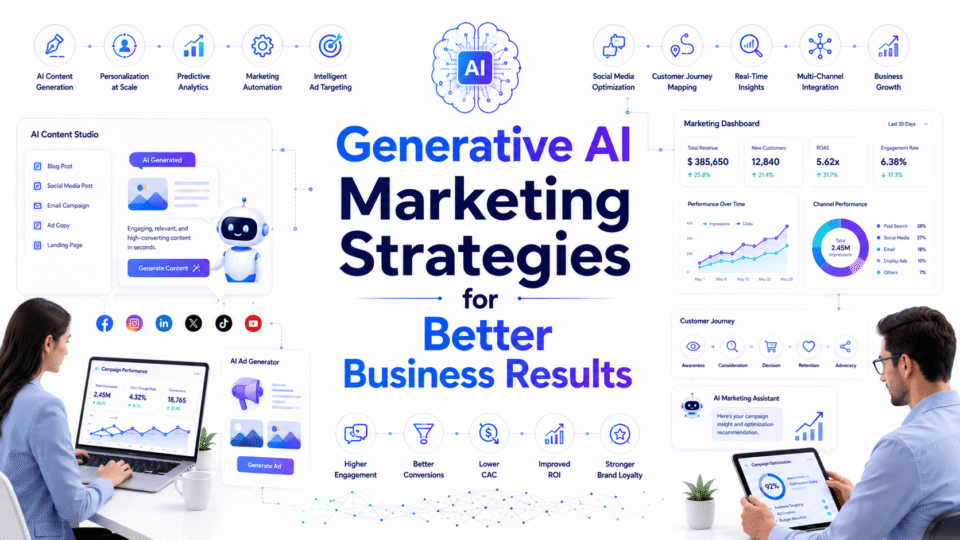
What once seemed distant now shapes daily strategy — generative AI in marketing redefines how firms handle outreach and engagement. Starting with raw ideas, moving through interaction design, and then refining outreach using data patterns, it guides choices toward better outcomes. Instead of relying solely on past trends, enterprises apply such systems to adjust messaging, refine targeting, and reach audiences more effectively. Across sectors, adoption grows — not abruptly, yet steadily — as these methods support smoother operations, elevate service quality, and offer measurable differentiation.
How Generative AI Works in Marketing
It begins with machines that learn patterns — these models craft material once thought exclusive to humans. From massive collections of information, outputs emerge: messages tailored to individuals, digital conversations shaped automatically, narratives formed without direct authorship. One result might be a message sent by email; another could adjust how platforms suggest next steps during browsing sessions. Patterns feed predictions. Responses adapt based on what came before. Activity flows not from intention but algorithmic structure built through repetition and scale.
Today’s companies use AI development services within marketing approaches. With these tools, efficiency grows because processes become simpler. Cost levels often decline when operations shift toward automation. Performance of initiatives rises due to insights pulled from collected information. Decisions gain strength where numbers guide direction.
Generative AI in Marketing: Core Capabilities
Personalized Customer Experiences
Among key benefits tied to generative AI lies its capacity to shape individualized interactions. By examining patterns in user actions, choices, and past transactions, artificial intelligence forms customized suggestions and material. When firms adopt AI development solutions, such customization tends to deepen involvement from users while lifting the rate at which interest turns into action.
Faster Content Creation
Content creation for blogs, websites, emails, or social channels usually demands significant time from marketing departments. With generative AI, quality material emerges faster, streamlining output across formats. Consistency in messaging stays intact, yet pressure on staff diminishes gradually. Efficiency rises when technology supports repetitive tasks behind the scenes.
Enhanced Campaign Optimization
Throughout campaigns, artificial intelligence observes results while delivering useful feedback. Where companies apply Artificial Intelligence development solutions, spending grows more efficiently as strong platforms emerge through live changes meant to boost returns.
Smart Ways to Use Generative AI in Marketing
Use AI Tools to Create Marketing Content
Despite shifts in strategy, material shaped for outreach still holds weight. With generative models, written pieces — ranging from summaries to digital posts — find tone and fit among intended readers. When firms adopt systems driven by machine learning, output grows without sacrificing consistency or context. Though tools evolve, purposeful communication stays central.
Utilize Predictive Analytics
Forecasting customer actions becomes possible when companies apply predictive methods. From records, artificial intelligence extracts patterns that signal upcoming shifts. With insights gained early, teams adjust strategies based on what is likely to unfold. Ahead of rivals, organizations position themselves by acting on foresight rather than reaction.
Smart Customer Help
Instant help arrives via AI chat systems, serving customer needs without delay. When queries arise, responses follow immediately — shaped by prior choices yet feeling individual. One path leads through buying steps, another resolves common concerns. Preferences guide suggestions, quietly influencing what appears next. Support stays active, never pausing, adjusting as interactions unfold.
Some companies find value in choosing to hire dedicated developer specialists skilled in artificial intelligence when building teams focused on modern marketing systems. A focus on qualified individuals often supports effective deployment alongside long-term operational stability within tech-driven environments.
Using AI to Help Businesses Work Better
Despite its complexity, generative AI supports business expansion through enhanced operational speed alongside refined engagement with clients. Where Artificial Intelligence development services are applied, routine marketing duties often shift to automated systems, so human effort redirects toward planning and original project design.
Automation powered by AI development solutions enhances how leads are found and developed. Through examination of customer behavior on various platforms, companies detect promising potential clients while sending tailored communication meant to prompt engagement. High-value opportunities emerge more clearly when data flows from diverse touchpoints. Personalized outreach follows patterns uncovered through continuous analysis. Conversion paths grow clearer under systematic observation. Messaging adapts where interaction history suggests shifts in interest. Clarity arises not from volume but from precision in timing and relevance.
Data-Driven Decision Making
Success in marketing often ties closely to how well data is examined. From patterns in numbers, generative AI extracts useful observations — offering clarity on what customers do, what markets need, even how ads perform. Those who adopt generative AI development company partnerships find themselves equipped with deeper analytic power, shaping choices with greater confidence. Insight emerges not from guesswork, but from systems trained to detect subtle shifts others might miss.
Omnichannel Marketing Optimization
Across digital spaces like apps, online sites, emails, and social networks, people engage with companies in many ways. From one point to another, generative artificial intelligence supports uniform communication, holding message clarity steady wherever contact occurs.
What Happens When Generative AI Meets Marketing
With progress in artificial intelligence, companies may see new tools appear in marketing. Because systems grow smarter, customized messaging could adjust instantly to user behavior. Where responses once required human input, machines now anticipate needs before requests form. Over time, speaking to devices might feel ordinary during daily tasks. When patterns shift, algorithms detect changes faster than traditional methods allow.
Success over time often follows when companies choose custom AI development services designed around unique operational aims. Rather than adopting generic tools, some firms find value in solutions shaped by specialized developers. Working alongside experts in intelligent technologies may support adaptation within fast-moving online environments. Focusing on precision-built software could influence how well an enterprise maintains its position amid shifts in technology.
Conclusion
Modern marketing evolves through generative AI, delivering tailored interactions while streamlining how material gets produced. Efficiency gains emerge when campaign adjustments happen faster than manual methods allow. Engagement improves as systems learn individual preferences over time. Firms adopting such tools often see performance rise without proportional cost increases. Operational workflows grow smoother under automated coordination. Long-term expansion becomes more attainable given consistent output quality. Strategic deployment of AI-driven approaches supports resilience amid shifting conditions. Success in crowded sectors is closely related to adaptive responsiveness. Positioning for relevance requires steady integration of intelligent processes.
